

CPA Letter · Expense Ratio

CPA Expense Ratio Letter

Verified Business Expense Calculations for Lenders

A CPA expense ratio letter confirms your business expense ratio. A licensed CPA calculates and signs it. Lenders request it to review your self-employment deductions.
CPA Letter for Home Loan

Starts at $199 · 2-hour express delivery available

CPA letters issued since 2021
0 +
states served, coast to coast
0
standard CPA letter delivery
0 hrs
core services, one licensed team
0
Why Lenders Request This

Deductions raise questions — a CPA answers them

Self-employed borrowers often claim significant business deductions, which lower taxable income on your tax return. A lender wants to understand whether those deductions look reasonable — a large deduction total isn’t automatically a red flag, but the concern comes from a lender’s need to verify the number.
Underwriters compare your expense ratio against your overall financial picture. Without this letter, an underwriter may ask you to explain your expenses yourself — a CPA letter removes that back-and-forth before it starts.
How It's Calculated

Your ratio, calculated from your actual records

You start by providing your total business revenue. Your CPA reviews your actual expense records against that figure — the ratio equals your total expenses divided by your gross revenue. There’s no single fixed benchmark; your CPA calculates your actual number, not an industry estimate.

Total Business Expenses

Gross Annual Revenue
Verified Expense Ratio
Not the Same Document

Is this the same as a P&L statement?

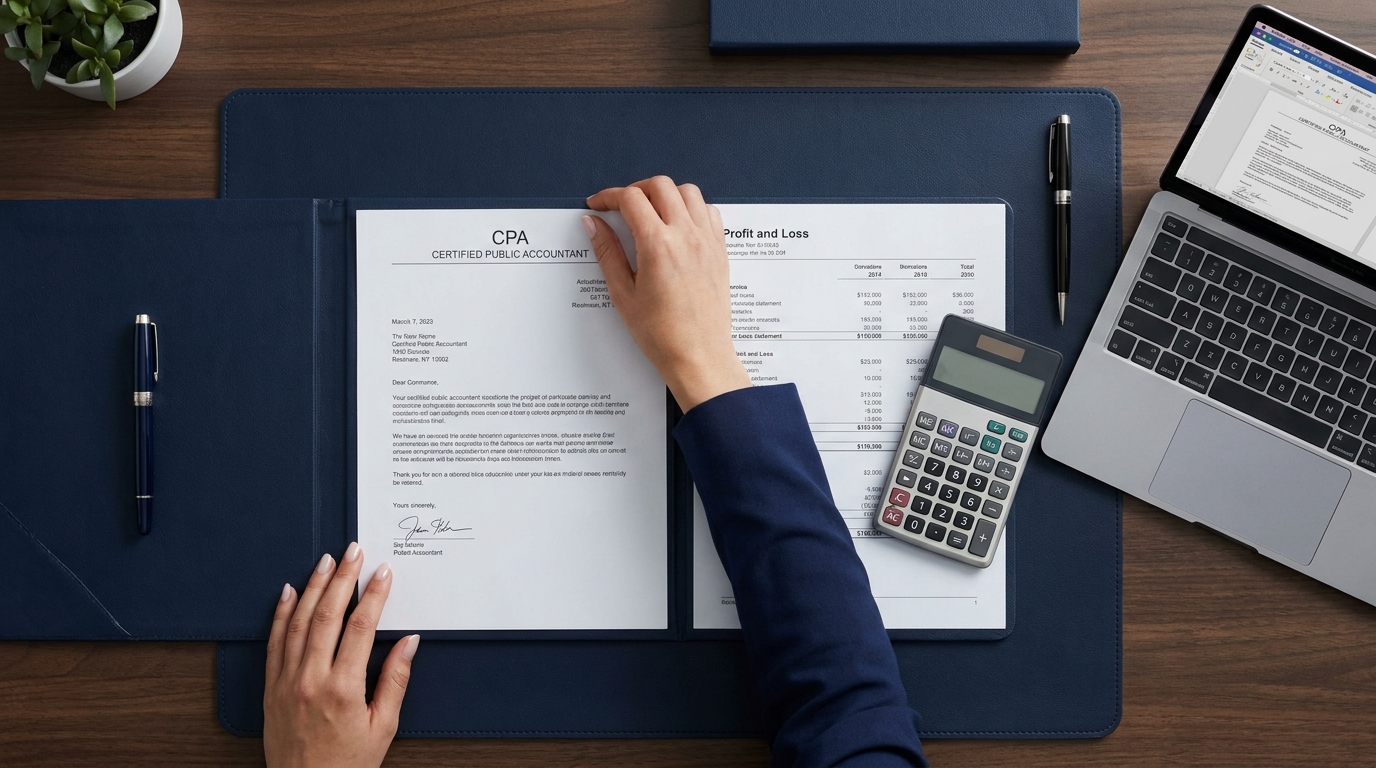
No. A profit and loss statement shows your complete financial picture. An expense ratio letter isolates and certifies one specific calculated number. Lenders sometimes request both for the same file — a generic P&L doesn’t satisfy a request for a calculated ratio.

Document
Scope
Profit and Loss Statement
Complete financial overview
Expense Ratio Letter
Narrow, specific calculation
Is this the same as a P&L statement
What Counts

What counts as a business expense in this calculation

Operating expenses, cost of goods sold, and Schedule C deductions typically count. Personal expenses run through a business account, and one-time non-recurring costs, don’t — your CPA separates these to keep your ratio accurate and defensible.
Counted
Not Counted
Not every borrower needs this letter
Who Needs This

Not every borrower needs this letter

Self-employed borrowers, business owners with significant deductions, and freelancers with high reported expenses need this letter most. Your lender asks for it by name when your deductions look high relative to your revenue.
Some businesses have typical deduction levels for their industry, and your lender may not request this letter in that case. Tell us if your lender requested this specific document by name.
By Situation

Where this letter comes up

The core letter stays similar across situations — the depth and timing shift based on where the request comes from.

Mortgage underwriters sometimes request an expense ratio letter by name — this happens when a self-employed borrower's deductions raise a specific question. This request usually comes up during full underwriting review, not at pre-approval, answering one remaining question about your deductions.

Self-employed income rarely looks as simple as a W-2 salary. Your deductions and expenses shape your final taxable income, and an expense ratio letter addresses one specific piece of that picture. A freelancer's ratio often looks different from a business owner with equipment or inventory.

Buying a home as a self-employed borrower involves added scrutiny, and your expense ratio may come up during underwriting — whether you're a first-time buyer or a repeat buyer. Jumbo loan applicants sometimes face this request more often, since a larger loan means closer income review.

What's Included

What your CPA expense ratio letter will include

See the full Notarized CPA Letter guide

01

Official letterhead with your CPA’s name and firm

02
A statement of your CPA’s license and credentials
03

Confirmed income, stated as annual or monthly figures

04
The specific time period the letter covers
05
A signed attestation from your CPA
We don’t publish a generic template as a stand-in for a real letter — your specific revenue and expenses shape the final document. It certifies your calculation at one point in time; your underwriter still reviews your complete file before making a decision.
The Process

How to get a CPA expense ratio letter

1

Tell us your revenue

We also need to know who requested this letter and why, to confirm the right approach for your situation.

2

Send your records

Usually your Schedule C and profit and loss statement, plus any specific request from your lender.

3

Scott Harrison, CPA, calculates

He reviews your actual expenses against your provided revenue, then drafts your letter from that calculation.

4

We format for your recipient

Every lender expects a specific format and level of detail. We match those before sending your letter.

5

You receive your letter

It arrives as a digital PDF. We add notarization if your situation requires it.

6

We revise on follow-up

Lenders sometimes ask for clarification. We turn most revisions around the same day.

Documents you'll need

Tax returns (1–2 years)

Confirms your reported income and expenses

Schedule C

Shows your specific business deductions

Profit and loss statement

Shows your current expense breakdown

Business expense records

Supports the categories included in your ratio

If your lender questions the calculation

A lender sometimes asks for clarification on your expense ratio. This usually means they want one category explained, not a bigger problem. Send us the specific question as soon as you get it.

Both of our packages include unlimited revisions until your loan is approved. Most revisions turn around the same day, since we’ve already completed the underlying calculation.

Frequently Asked Questions

Answers before you ask

What is a CPA Expense Ratio Letter?
It’s a signed document from a licensed CPA. It confirms your business expense ratio for a lender.
Self-employed borrowers and business owners with significant deductions need this letter most. Your lender may request it by name.
Lenders want to verify that your claimed business deductions look reasonable. This letter gives them a CPA-certified number to reference, replacing your own explanation alone.
Not always. Your lender requests one when your deductions raise a specific question during underwriting.
Yes. A licensed CPA reviews your actual records and calculates your ratio from your provided revenue.
Your CPA divides your total business expenses by your gross revenue. The result depends on your specific expenses and business type, not a fixed formula.
Yes. Your ratio reflects your actual expenses and revenue for the period covered. A new letter reflects your current numbers, not last year’s.
Most requests need your tax returns, Schedule C, and profit and loss statement. Your CPA confirms what your situation needs.
Our standard package delivers in 2 hours. Our notarized package delivers in 24 hours.
No. A P&L shows your complete financial picture. An expense ratio letter certifies one specific calculated number.

Your CPA’s credentials, your calculated ratio, and the underlying figures used. It should also state the time period the calculation covers.

Our standard package starts at $199. Notarized letters are available at $349.
No. It supports your application with one confirmed data point. Your underwriter still reviews your complete file.
It needs to be a licensed CPA. Most lenders don’t accept a calculation from an unlicensed preparer.
Related CPA Letter Guides

CPA Letter for Mortgage →

CPA Letter for Self-Employed →

Notarized CPA Letter →

Back to CPA Letter main page →

Get your expense ratio letter today

Scott Harrison, CPA, has issued over 1,000 CPA letters since 2021 — many confirming expense calculations for lenders. Get yours started today, with 2-hour express delivery available.